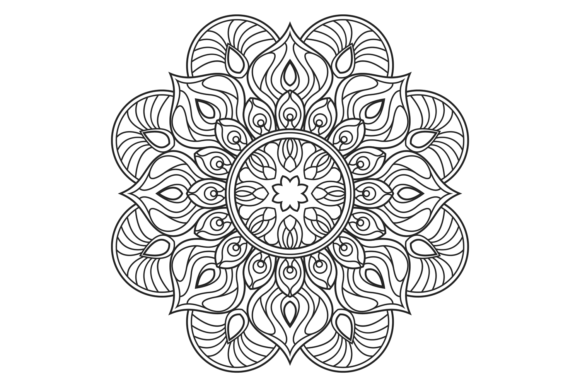
Mandala Line Drawing for Creative Design
First Impressions of the Mandala Line Drawing
The Mandala Line Drawing. Decorative Indian immediately catches the eye with its intricate, flowing lines and symmetrical patterns. It exudes a sense of calm and balance, reminiscent of Zen philosophy. This graphic design asset is ideal for projects that aim to evoke mindfulness, spirituality, or cultural aesthetics. The clean, minimalist style makes it versatile for both modern and traditional design contexts.
Fitting Into Real Client Projects
As a designer working on a handmade brand’s packaging and branding, I often look for assets that blend artistry with practicality. The Mandala Line Drawing fits seamlessly into such scenarios. Imagine a boutique selling handcrafted teas and wellness products. This line drawing could serve as a central element in logo design, product labels, and social media graphics, reinforcing the brand’s connection to nature and mindfulness.
Where the Mandala Line Drawing Excels
This illustration performs exceptionally well in several key areas. For instance, it works beautifully as a hero graphic on a website or as a decorative accent on product mockups. Its high contrast against white backgrounds ensures visibility even in small formats. It also lends itself well to themed collections, especially those tied to spiritual or cultural themes.
When used in editorial design, the Mandala Line Drawing can enhance the visual mood without overwhelming the content. It’s particularly effective in print-on-demand designs, Etsy products, and Cricut projects where the focus is on creating visually appealing, repeatable elements.
When to Use the Mandala Line Drawing Carefully
However, there are situations where this design might not be the best fit. In crowded layouts or complex backgrounds, the Mandala Line Drawing can become lost or diluted. It’s also not ideal for minimalist branding or professional corporate materials, where clarity and simplicity are paramount.
Additionally, when used in low-contrast settings or at very small sizes, the detail may not translate effectively. Testing the design in black and white and across different background colors is essential before finalizing its use in a client project.
Impact on Branding and Visual Trust
The Mandala Line Drawing has the potential to elevate the emotional appeal of a design project. It adds a layer of sophistication and cultural depth, which can resonate strongly with audiences seeking authenticity and meaning. However, it must be used thoughtfully to maintain visual trust and avoid appearing too ornate or inconsistent with the brand’s identity.
For small business branding, this asset can help create a cohesive visual hierarchy that supports the brand’s narrative. When paired with appropriate typography and color schemes, it can reinforce the brand’s personality and values, making the overall design more engaging and memorable.
Practical Designer Notes
Before incorporating the Mandala Line Drawing into a commercial project, consider the following: test it in black and white, check contrast on light and dark backgrounds, preview it at small and large sizes, place it on real mockups, and test print quality. Review the file formats—EPS, JPG, SVG, transparent PNG—to ensure they meet your project’s needs.
If transparency is included, inspect the PNG to confirm it aligns with your design requirements. Check SVG or vector editability if you need to customize the design further. Compare it with various font styles to ensure it complements the typography effectively.
Always confirm the commercial license before using the asset for a client or business project. Ensuring proper licensing is crucial for maintaining legal compliance and protecting your work.
Conclusion: A Useful Asset for Professional Design Work
The Mandala Line Drawing. Decorative Indian is a valuable creative asset for designers working on a wide range of projects. Its versatility and aesthetic appeal make it suitable for branding, packaging, digital ads, and more. While it requires careful consideration in certain contexts, its ability to enhance visual storytelling and emotional engagement makes it a compelling choice for many design applications.