Decorative Square Design Elements
A Designer’s First Impression
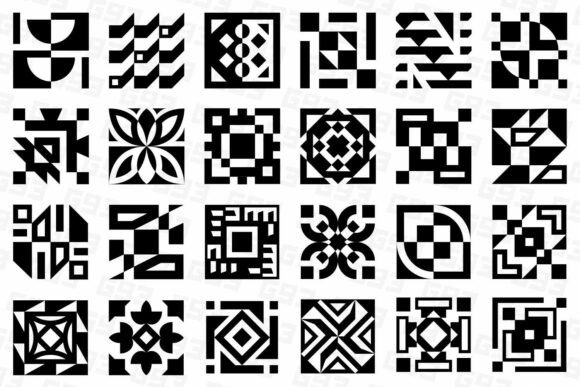
The moment I opened the Decorative Square Design Elements, I was struck by its clean, modern aesthetic. The 24 black and white geometric square icons feel like a curated collection of abstract, tribal, and minimalist motifs that speak to both contemporary and traditional design sensibilities. Each icon is a standalone piece, yet they share a cohesive visual language that makes them versatile for multiple applications.
The illustrations are sharp and precise, with clear lines that suggest a high level of detail without overwhelming the viewer. This balance between simplicity and complexity is what makes them ideal for embroidery projects that require both visual impact and subtlety. As an experienced designer, I immediately saw how these could be used in everything from custom apparel to decorative accents.
Real-Life Use Case: Custom Embroidered Tote Bag
To test the practicality of the Decorative Square Design Elements, I imagined using one of the icons on a custom embroidered tote bag. The square shape fits naturally into the geometry of a tote, especially when placed near the handle or as a central motif. The black and white color scheme ensures it will stand out on any fabric, whether it's a light linen or a dark denim.
I considered the stitching process and realized that the embroidery file would need to be carefully reviewed for stitch density and thread color contrast. A well-executed satin stitch or fill stitch would bring the patterns to life, while a running stitch could be used for outlines or borders. The key is to ensure that the design remains legible and visually appealing after stitching, especially on larger surfaces like tote bags.
Where to Use With Care
While the Decorative Square Design Elements offer great versatility, there are certain scenarios where they might not perform as well. For example, using them on small hoop sizes can result in a loss of detail, making the patterns appear too sparse. Similarly, textured fabrics or stretchy materials may cause distortion, so it's important to use the right stabilizer and test the design on scrap fabric first.
Dark fabrics can also pose a challenge, as the black and white nature of the designs may not provide enough contrast. In such cases, experimenting with thread colors or adjusting the stitch density can help enhance visibility. Likewise, dense stitch areas or intricate corners may require more careful handling, especially on curved surfaces like caps or hats.
Visual Appeal and Product Value
The Decorative Square Design Elements have a strong visual appeal that can elevate a handmade product or a custom embroidery project. Their minimalist style lends itself well to both modern and ethnic branding, making them suitable for a wide range of craft business applications. Whether used as a logo, a decorative accent, or a full-scale design, these elements add character without being overpowering.
From a commercial embroidery perspective, the design assets offer good value. They are easy to adapt and can be used across multiple products, including personalized gifts, holiday embroidery, and custom apparel. However, it's essential to consider the licensing terms before selling finished items or digital products. Always confirm whether the design is appropriate for commercial use and if proper permissions have been obtained.
Handmade Presentation and Brand Consistency
For small shop product creators and Etsy sellers, the Decorative Square Design Elements can serve as a powerful tool for maintaining brand consistency. The uniformity of the design allows for easy repetition across different products, which is especially useful for creating a cohesive look in a boutique or craft fair setup.
When used in printable mockups, the embroidery file should be tested to ensure it looks good in both black and white and in color. This helps in accurately representing the final product to potential customers, building trust and enhancing buyer engagement. A well-presented finished product can make all the difference in a competitive market.
Practical Designer Notes
Before using the Decorative Square Design Elements in a real project, there are several practical steps to take:
- Test the design on scrap fabric to assess how it looks after stitching.
- Check thread color contrast to ensure the design remains visible on different fabric types.
- Review stitch density to prevent over-stitching or under-stitching.
- Confirm hoop size to avoid distortion or poor placement.
- Inspect small details for clarity and precision.
- Test it in black and white mockups to see how it performs on light and dark backgrounds.
- Use proper stabilizer to maintain fabric integrity during stitching.
- Ensure the design works for both personal and commercial projects.
- Confirm licensing before selling finished items or digital products.
By following these guidelines, you can maximize the potential of the Decorative Square Design Elements and ensure they deliver the visual impact and quality your customers expect.