Retro Corner
A Timeless Element for Vintage-Inspired Embroidery
As a designer who’s stitched countless projects from custom apparel to handmade gifts, I’ve learned that the right embroidery design can make or break a project. When I first saw Retro Corner. Vintage Decorative Black Line Element, I was immediately drawn to its clean lines and nostalgic aesthetic. It’s not just a graphic—it’s a mood, a statement, and a versatile tool for any designer looking to add vintage charm to their work.
The First Impression: Clean Lines, Nostalgic Feel
Retro Corner. Vintage Decorative Black Line Element is a simple yet striking illustration. Its black line work creates a sense of elegance and retro sophistication, reminiscent of mid-century design. The isolated nature of the design makes it easy to integrate into various projects without overwhelming the overall composition. This simplicity is both its strength and its potential limitation—depending on how you use it.
The design feels like a decorative accent rather than a full-fledged motif. It’s perfect for adding a touch of vintage flair to modern items, whether it’s a tote bag, a sweatshirt, or a personalized gift. But as with any design, its success depends on context. Let’s explore how it performs in real-world scenarios.
Real-Life Use Cases: From Tote Bags to Holiday Gifts
One of my recent projects involved creating a custom embroidered tote bag for a local boutique. I used Retro Corner. Vintage Decorative Black Line Element as a corner embellishment. The result was subtle yet effective—adding a vintage edge without overpowering the main design. It worked well because the design is small enough to be an accent but large enough to make an impression.
Another scenario where this design shines is in holiday embroidery. Imagine a Christmas sweater with a minimalist black line corner motif. It adds a classic, timeless feel that complements the festive theme without clashing. Similarly, it could be used on baby clothes, caps, or even aprons, where a delicate touch is often preferred.
However, there are situations where Retro Corner. Vintage Decorative Black Line Element might not perform as well. For example, using it on a dense fabric like denim or a stretchy material like jersey could lead to distortion or poor stitch density. It also requires careful consideration when applied to dark fabrics, as the contrast may not be strong enough to stand out.
Design Considerations for Real Projects
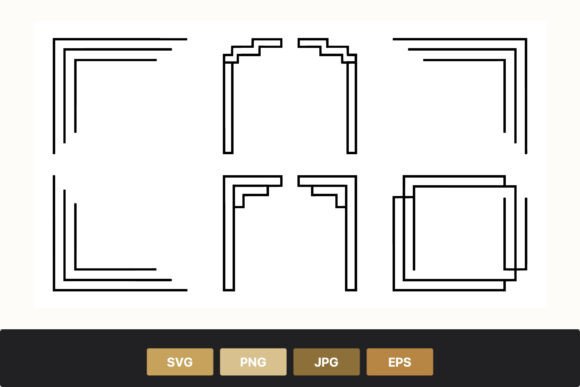
When evaluating an embroidery design for practical use, several factors come into play. Retro Corner. Vintage Decorative Black Line Element is a vector-based graphic, which means it should render cleanly across different file formats like EPS, JPG, SVG, and PNG. However, it’s important to test the design on scrap fabric before committing to a final product. This allows you to see how the stitches interact with the fabric texture and how the design holds up under stitching.
Stitch density is another key consideration. A high-density fill stitch might cause the design to look too busy, while a low-density approach could leave it feeling sparse. Finding the right balance is crucial for maintaining the design’s visual appeal. Additionally, the use of stabilizer is essential, especially when working with delicate or textured fabrics.
Thread color contrast also plays a role. While the design is black, testing it on light and dark backgrounds can reveal how it interacts with different fabric tones. For instance, on a white background, the design stands out clearly, but on a darker fabric, it may appear muted. Always consider the final product’s intended use and the audience’s expectations.
Where to Use Carefully: Small Hoops, Textured Fabrics, and Dark Backgrounds
Retro Corner. Vintage Decorative Black Line Element is best suited for medium to large hoop sizes, as its intricate details require adequate space to render properly. Using it in small hoops may result in loss of detail or distortion. Similarly, applying it to textured or stretchy fabrics can lead to uneven stitching or misalignment.
Dark fabrics pose another challenge. While the design is black, its line work may not show up as clearly on deep-colored materials. In such cases, testing the design in black and white mockups can help identify potential issues before finalizing the project.
For products that undergo frequent washing, like kitchen towels or baby clothes, the durability of the design becomes a concern. Ensuring that the embroidery is properly stabilized and that the thread is suitable for repeated use is essential for long-term satisfaction.
Visual Appeal, Product Value, and Customer Trust
The visual appeal of Retro Corner. Vintage Decorative Black Line Element is undeniable. It adds a touch of vintage charm that resonates with many customers, especially those who appreciate handmade and personalized items. However, the design’s simplicity means it must be used thoughtfully to avoid looking generic or overused.
From a business perspective, incorporating this design into your craft business or Etsy shop can enhance brand consistency. If your brand leans into vintage aesthetics, this design fits seamlessly into your overall visual identity. It also supports the creation of personalized gifts, which are highly valued by customers looking for unique, handcrafted items.
Ultimately, the success of a design like Retro Corner. Vintage Decorative Black Line Element depends on how well it aligns with the final product and the customer’s expectations. It’s not just about what the design looks like—it’s about how it contributes to the overall experience of the finished item.
Final Thoughts: A Versatile Tool for Designers
Retro Corner. Vintage Decorative Black Line Element is a versatile design that can elevate a wide range of embroidery projects. Whether you’re creating custom apparel, holiday gifts, or boutique merchandise, it offers a timeless aesthetic that appeals to a broad audience. However, its effectiveness hinges on thoughtful application and attention to detail.
As a designer, I always recommend testing designs on scrap fabric, checking thread color contrast, and confirming licensing terms before selling finished products. With these considerations in mind, Retro Corner. Vintage Decorative Black Line Element can be a valuable asset in your design toolkit, helping you create meaningful, visually appealing projects that resonate with your audience.